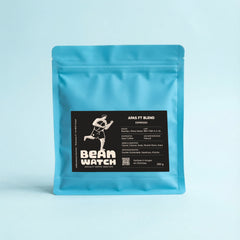
Which beans work best
At a ratio of 1:8 to 1:10 the milk is clearly in the majority. A strong, sweet roast still comes through. Very light, acidic coffees, on the other hand, disappear almost completely.
Origin, calories and how it differs from the cappuccino are covered in the latte macchiato article.
With a bean-to-cup machine
On a bean-to-cup machine the sequence usually runs by itself: many machines dispense milk first and the espresso after, and the layers form in the glass. Three settings still decide the taste.
- With lightly roasted beans, set the brew temperature to at least 93 °C. That keeps the acidity in check.
- If the espresso tastes too bitter, set the grind coarser. If it tastes too sour, set it finer.
- The biggest lever is regular cleaning. Old coffee oils and milk residue show up in every cup.
Frequently asked questions
Why do the three layers form?
Because of the different densities. The heaviest, liquid milk sits at the bottom, the light foam on top, and the espresso settles in between. For that to work, the milk has to be hot and the espresso fresh.
Which ratio is right?
About 1:8 to 1:10, so roughly 24 g of espresso to 240 ml of milk. More espresso makes the drink stronger, but it quickly destroys the layers.
Does it work with a bean-to-cup machine?
Yes, many machines have a programme for it and dispense milk first, then espresso. The layers come out well, the foam is usually a little airier.
Wie viele Kalorien hat ein Latte Macchiato?
Mit 240 ml frischer Vollmilch kommst Du auf rund 155 kcal pro Glas. Die Milch entscheidet dabei fast allein: Mit 1,5 % Fett sind es etwa 134 kcal, mit 3,8 % rund 181 kcal. Die ganze Rechnung steht im Latte-Macchiato-Artikel.