Skip to content
Recipe

Espresso Macchiato recipe

An espresso with a spot of milk, originally that was all there was to it. Today there are two routes: the classic dab with a spoon and the modern version with latte art in the espresso cup.

Joscha Gewinner
Rate this recipe

5.0 of 5 stars from 1 rating

Last updated on

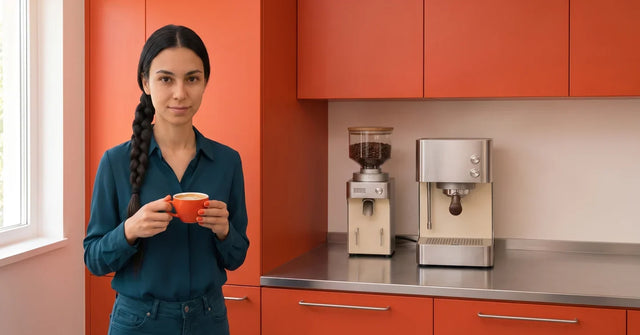
Julia mit einem Espresso Macchiato in der dunkelblauen Tasse vor Mühle und Espressomaschine

At a glance

Time4 minutes EffortEasy Caffeine70 mg CategoryCoffee recipe

Ingredients for one cup

Coffee beans (Brew ratio 1:2.5)10 g
Espresso cup (pre-warmed)1
Whole milk (fresh, 3.5 to 3.9 % fat)30 ml

Caffeine and nutrition

Caffeine70 mg
Energy20 kcal
Fat1.1 g
Carbohydrates1.4 g
Protein1.0 g

Values per cup. Calculated with fresh whole milk, without sugar.

What do I need for an espresso macchiato?

Portafilter machine
Portafilter machine
Grinder
Grinder
Coffee Scale
Coffee Scale

For 30 ml of milk you need the smallest pitcher you have, plus an espresso machine, grinder and scale for a clean shot.

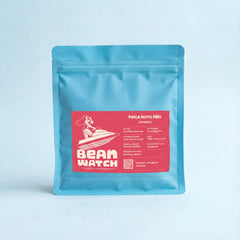
Finca Hoyo Frío Espresso The right beans for it

Finca Hoyo Frío Espresso

Tasting notes: peach, apricot.

View the coffee
Method

How do you make an espresso macchiato?

01 Espresso läuft aus dem Siebträger der Zuriga in eine dunkelblaue Espressotasse auf der Waage, Julias Hand am Siebträgergriff

Pull the espresso

Grind 10 g and pull around 25 ml of espresso straight into the pre-warmed cup.

Tip: because so little milk follows, you taste every extraction fault. Worth tasting the shot neat once beforehand.

Macchiato means stained: what is meant is the spot of milk on the espresso.

02 Julia schäumt wenig Milch im kleinen Edelstahlkännchen an der Dampflanze der Zuriga auf

Froth a little milk

Froth 30 ml of milk. That is little for a pitcher. Take the smallest one you have, otherwise the wand will not catch the milk.

Tip: a short stretching phase, then guide the wand deeper: in the rolling phase the bubbles break down into fine microfoam. At 60 to 65 °C it is ready, that is the moment when the pitcher becomes uncomfortably hot against the flat of your hand.

Whatever foam is left over is enough for a second macchiato.

03 Ein Löffel setzt einen runden Tupfer Milchschaum mittig auf die Crema im dunkelblauen Espressotässchen

Dab or pour

Classic: set a spoonful of foam in the middle of the crema. Modern: let the foam flow in and draw a small design.

Tip: there is little room in the small cup. Go closer to the surface than with a cappuccino, then the design holds.

In the modern version the macchiato carries a small design, and the circle works soonest.

Variations

  • Classic: a spoonful of foam or a hot drop of milk on the espresso, done.
  • Modern: fine-pored foam up to the rim and a small latte art design. A circle works soonest, a heart after a few attempts.
  • Latte macchiato: the big reversal. There the milk is marked with espresso, not the other way round. The recipe is here.
Per serving

Caffeine and nutrition

70 mg Caffeine
20 kcal Energy
1.1 g Fat
1.4 g Carbohydrates
1.0 g Protein

Values per cup. Calculated with fresh whole milk, without sugar.

Which beans work best

Here the espresso stays the lead and the milk only takes the edge off. Anything that tastes good to you neat works as a macchiato too. Fruity coffees come through even better than in any other milk drink.

How a spot of milk became a classic of its own is in the espresso macchiato article.

Frequently asked questions

What does macchiato mean?

Italian for "stained". What is meant is the spot of milk on the espresso. With a latte macchiato it is exactly the other way round, there the milk is stained with espresso.

Classic or modern?

Both are right. The classic macchiato is an espresso with a dab, the modern one is a small latte art exercise. Anyone who wants the espresso in the foreground sticks with the dab.

How much milk goes in?

Classically a spoonful, modern up to 30 ml. More turns it into a cortado and eventually a cappuccino.