Skip to content
Recipe

Espresso martini recipe: how to get the crown of foam

The crown of foam on an espresso martini comes from the espresso, not from the shaking. It forms from the CO2 the bean still releases after roasting, and that is gone as soon as the espresso stands for a few minutes. That's why our espresso goes straight from the machine into the shaker. We show you the amounts, the trick that keeps the crown stable, and which bean you can still taste alongside the sugar and alcohol.

Joscha Gewinner
Rate this recipe

5.0 of 5 stars from 1 rating

Last updated on

Espresso Martini auf orangenem Marmor mit drei Kaffeebohnen

At a glance

Time5 minutes EffortEasy Caffeine126 mg CategoryCoffee recipe

Ingredients for one glass

Coupe glass1
Ice cubes (for the glass and shaker)1 handful
Coffee beans (brew ratio 1:2.5)18 g
Vodka5 cl
Coffee liqueur2.5 cl
Sugar syrup1 cl
Coffee beans to garnish3 pieces

Caffeine and nutrition

Caffeine126 mg
Energy220 kcal
Fat0.0 g
Carbohydrates14.0 g
Protein0.0 g

Values per glass. Contains around 20 g of pure alcohol per glass, just under two standard drinks.

What do I need for an espresso martini?

Portafilter machine
Portafilter machine
Grinder
Grinder
shaker
shaker
Fine sieve
Coupe glass

Besides an espresso machine and grinder, you need a shaker, a fine sieve and a glass that has been chilled beforehand.

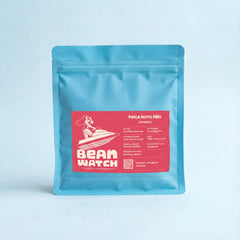
Finca Hoyo Frío Espresso The right beans for it

Finca Hoyo Frío Espresso

Tasting notes: peach, apricot.

View the coffee
Method

How do you make an espresso martini?

01

Chill the glass

Fill the coupe glass with ice cubes and a little water and leave it to stand until everything else is ready.

Tip: in a cold glass the crown lasts longer, because the foam collapses more slowly.

The cold glass keeps the crown of foam stable for longer.

02

Pull a fresh espresso

Grind 18 g of beans and pull 4.5 cl of espresso from them, brew ratio 1:2.5. Use it straight away and don't let it cool.

Tip: the crown of foam forms from the CO2 that freshly roasted beans release during brewing. If the espresso stands for a few minutes, the gas escapes and the crown stays thin.

4.5 cl of espresso from 18 g of beans, straight from the machine into the shaker.

03

Shake short and hard

Put the espresso, vodka, coffee liqueur and sugar syrup into the shaker with a full handful of ice cubes and shake hard for 10 to 15 seconds, until the outside of the shaker frosts up.

Tip: short and hard beats long and lazy. The crown forms in the first few seconds; after that the drink only gets watered down.

Once the shaker frosts up on the outside, the drink is cold enough.

04

Double strain and garnish

Tip the ice water out of the glass, strain the drink through the bar strainer and also through a fine sieve into the glass, and place three coffee beans on the crown.

Tip: in bar tradition, the three beans stand for health, wealth and happiness.

The fine sieve holds back ice shards so the surface stays smooth.

Variations

  • Alcohol-free: 5 cl of cold, unsweetened coffee instead of vodka and 2.5 cl of coffee syrup instead of coffee liqueur. Then leave out the sugar syrup.
  • Without an espresso machine: a stovetop pot or AeroPress gives enough body but releases less CO₂. The crown turns out thinner, so dose a little stronger.
  • Less sweet: with a heavily sweetened liqueur, cut the sugar syrup to half a centilitre.
Per serving

Caffeine and nutrition

126 mg Caffeine
220 kcal Energy
0.0 g Fat
14.0 g Carbohydrates
0.0 g Protein

Values per glass. Contains around 20 g of pure alcohol per glass, just under two standard drinks.

Frequently asked questions

How do you get the foam on an espresso martini?

The foam comes from the espresso. Freshly roasted beans release CO2 during brewing, which spreads into fine bubbles when shaken and forms the crown. If the espresso stands for a few minutes first, the gas escapes and the crown stays thin.

Three things help: put the espresso into the shaker straight after brewing, shake hard for 10 to 15 seconds rather than long and lazy, and finally pour the drink through a fine sieve so no ice shards spoil the surface.

Which coffee liqueur goes in an espresso martini?

The liqueur brings sweetness, texture and a good part of the coffee flavour. It's worth looking at the ingredients: if they list real coffee rather than flavouring, the drink tastes rounder and less like syrup.

In Switzerland, too, small producers now make their coffee liqueur with specialty coffee. If you like it classic, a dark, heavily sweetened liqueur works too. In that case, cut the sugar syrup to half a centilitre.

Which bean works in an espresso martini?

Here the espresso sits alongside 7.5 cl of alcohol and sugar syrup, so intensity is what counts. Two directions work.

Chocolatey, nutty espressos blend with the liqueur into a round, classic drink. Our Fincamigos Espresso brings dark chocolate, almond and cranberry to it.

Fruity espressos add a note of their own on top that you can still pick out in the glass. The Finca Hoyo Frío is a classic washed coffee and still tastes clearly of peach and apricot. Try both and decide whether the coffee should stand out or blend in.

Why is it called an espresso martini when there's no martini in it?

The name comes from the glass, not the vermouth. The drink is served in a martini glass, and in 1980s London "martini" was shorthand for anything that came to the table in that shape.

It was invented by bartender Dick Bradsell in London, originally under the name Vodka Espresso. Gin and vermouth, the ingredients of a real martini, aren't in it.

Can you make an espresso martini without an espresso machine?

Yes, with some compromise on the crown. A stovetop pot or an AeroPress gives a strong coffee with enough body, but releases less CO2 than a freshly pulled espresso. The foam turns out thinner as a result.

In that case, dose a little stronger and use 4.5 cl of a concentrated brew rather than normal-strength coffee. Cold brew works for flavour too, but hardly foams, because the gas escaped long ago during the long steep.

How do I make an alcohol-free espresso martini?

Replace the vodka with 5 cl of cold, unsweetened coffee or cold brew and the coffee liqueur with 2.5 cl of coffee syrup. Leave out the sugar syrup, because the coffee syrup already sweetens. Everything else stays the same: freshly brewed espresso, shake hard, double strain.

Without alcohol, the coffee carries the whole drink. An espresso with a distinctive profile comes through more clearly here than in the version with vodka.